
How We Look After Each Other
Gutsy’s guidelines for circles, courses and groups
Every group I host runs on a set of agreed guidelines.
Why bother? Because most groups run on unspoken rules, and unspoken rules favour whoever already knows them. Writing ours down, and agreeing to them together, means nobody has to guess and it’s easier not to feel like an outsider. They act as regular reminders that we get to do things differently here – that we get to practise being together better. Importantly, they’re part of how Gutsy groups are built and held, not a way of policing them.
These guidelines aren’t fixed and they aren’t perfect. Everyone in the group can add to them, and we change them when something isn’t working. We revisit them together, too: a quick reminder at the start of each circle, a proper look whenever someone new joins, and every few sessions on longer courses.
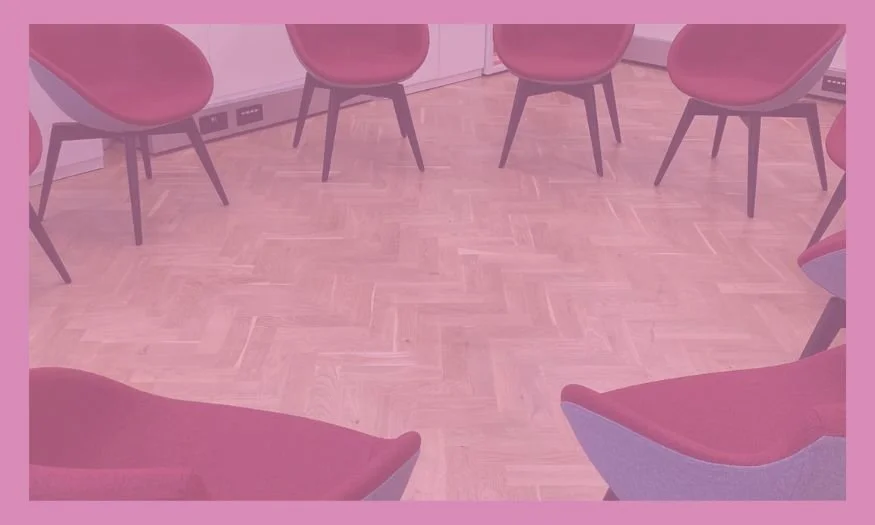
The guidelines adapt to different groups: meeting online or in person, an established group or a new one. But these give you a sense of the kind of brave space I aim to hold.
Looking after each other
Everything shared is confidential. We agree not to pass on anything said in the group, including who was there.
What’s shared stays in the space. Don’t pick a conversation up again in a break or afterwards unless the person who shared brings it up – they may not want to talk about it outside the space we’ve held.
No photos, screenshots or recordings, unless it’s invited and everyone agrees.
Make an effort to learn people’s names and pronouns.
Respect boundaries. If an exercise involves touch (a hand on a partner’s shoulder, say), we agree the boundaries together first.
Be kind, to yourself and to others. Some exercises invite emotion, but it’s never directed at another participant.
Try not to make assumptions or judgements about others, including about nationality, race, ethnicity, culture, religion, sexuality, gender, health, class, age, disability, profession, language or background. You’ll have plenty in common with the others in the group, and plenty that’s different.
Please arrive on time, and let me know if you’ll be late or can’t make it. Some groups have a cut-off time for latecomers to protect the space. I’ll always say so in advance.
No eating or chewing gum during sessions, unless it’s for medical reasons – food and chewing can be distracting or upsetting, for example if someone is fasting or experiences misophonia.
Taking turns
Nobody interrupts, fixes, offers uninvited advice or feedback, or just waits for a gap to jump in.
You can always pass, and I will often offer ways to do that. Listening and witnessing count as taking part.
Take space and take your time, and make space for each other.
Looking after yourself
Stretch and take risks when you want to. You choose how far, and you can stop at any point.
Mistakes are allowed, and so is forgiving yourself. We’re all learning.
Try not to compare yourself with others. We all do it, and it takes practice to lose the habit. Try turning admiration into inspiration.
It’s normal for part of you not to want to show up sometimes. If you can, come anyway and see how it goes. If you can’t, please let me know.
Be curious. Whatever comes up is useful information, including before and after the session.
Checking in along the way
Speaking up about a problem is hard, and harder if you’re shy. So I try to ask rather than waiting for you to come to me.
At the end of each gathering, there’s a moment to say what’s working and what would make it easier next time.
On courses, there are check-ins partway through, and an anonymous feedback form at the end. If something’s affecting you during a course though, I’d rather hear it from you directly, so we can sort it out together straight away.
I always try to linger for a bit at the end of gatherings, so you can find me if a one-to-one chat feels better – and if we need more time, we can arrange that.
If something isn’t right
You can step out of any exercise or conversation. I’ll often offer a simple way to indicate that you’re opting out, and I’ll check in quietly afterwards in case you’d like to talk. You never have to explain yourself.
If there’s something you want to raise after a session, you can tell me whichever way feels easiest: a quick word at the end or an email.
You don’t need to feel completely clear about it. Just ‘something felt off today, can we talk?’ is enough.
There’s no time limit. If you realise days or weeks later that something bothered you, my door is still open.
If something I did upset you, I’d especially like to know. I won’t get everything right. For now, Gutsy is just me, so there’s no one else to go to, and I know that can make it harder to say. If writing it down is easier, an email is completely fine. However you tell me, I’ll listen, thank you, and we’ll work out next steps together.
I’m not a therapist. If something comes up that’s bigger than a group like this can hold, I’ll help you find support that can.
Acknowledgements
These guidelines have been shaped by my own experience of workshops, courses, conferences and gatherings, online and in person.
They’ve also been informed and influenced by:
my training with Claire Schrader in her Sunflower Effect method
my training in circle facilitation with Gemma Brady
guidance from DEI consultant Sumi Fitzgerald
the Anti-Racist Forum’s Safer Spaces Guidelines
Christabel Mintah-Galloway’s Relational Skills and Repair workbooks
generous and brave suggestions from participants over the years.
I’m grateful to all of them. How I’ve put it all together is my own, so any gaps or mistakes are mine.